Stepped fence along a sloping side passage
A boundary that runs down a slope cannot sit on one level line, so the fence has to step. Each panel is set a little lower than the one before it, and the posts, boards and gate all follow that step. The count is simple once the steps are known, but a fence stepped by eye leaves a gap at the foot of a panel every time. This guide follows a 12.8 metre run down a side passage, with a gate at the low end, to a single order.
Lakeside BM is the Gillingham and Hempstead delivery site of Discount Builders Merchants (KENT) LTD, the builders' merchant at Lower Road, Northfleet, DA11 9BB. There is one yard, and orders are placed on www.discountbm.co.uk.

Reading the slope
Stretch a string along the top of the boundary, from the first post to the last, and let it fall where the ground does. Measure the drop at each post with a level and a straight length of timber, and write the figure against the post's number. A drop of about 150 mm from one panel to the next is a sensible step for a waney lap panel, and a steeper passage needs shorter bays or a different panel.
Walk the string at the same time as the drop, because a passage often falls faster near the house and more slackly toward the road. Where the fall changes, put a post at the change so each bay sits on its own step, and the panels are never asked to bend across a bend in the ground.
Stepping the panels
Each panel stays level on its own, with its posts set to the ground at each end. The step happens at the posts and not in the middle of a panel, so no panel hangs out of true. Hold a panel against the next post before it is fixed and look at the gap at the foot, because a stepped fence with gaps along the bottom looks worse than a level one with none.
A waney lap panel has its boards set horizontally, which makes each step show cleanly along the top rail. A featheredge panel with vertical boards hides the step better at the foot, and many gardens on a slope end up choosing it for that reason. Both panels are the same size, so the count of bays is the same whichever is chosen.
Gravel boards that follow the step
Gravel boards take the foot of the panels and sit in the same grooves in the posts, but on a slope each one is cut to fall with the ground. Mark the top of each board from the panel above it, and take the cut from the same 3 metre length, so every bay takes one board and none is left short at the foot.
Boards set in soil that falls away need their lower edge kept clear of the ground by a few centimetres. A board buried in the soil rots from the foot upward, and the fence loses its bottom edge long before its panels give out.
Posts on a slope
Set each post in the run to about 0.7 metres below its own spot on the ground, and the same 2.7 metre length serves every post in the run. The two gate posts go deeper than that, as the gate paragraph explains, and their tops are set to the height the gate needs. Nothing has to be cut off the top of a run post to make it fit.
Finish the post mix at each hole with a slight fall away from the post, so water runs off rather than settling beside it. Mix the post mix a bag at a time and use each batch before it stiffens, because a post set in soft ground on a slope is the first to lean in a wet winter.
The gate and the passage
The gate sits at the low end of the run, where the passage is widest, and it needs a clear opening of about 900 mm for a barrow or a sack truck. Hang it on the two gate posts, which are set deepest of all the posts in the run, with the hinge post deepest of the two, because it carries the weight of the gate every time it swings. Check the hinge side is plumb before the gate is fitted, since a gate that drops at the latch is the most common complaint about a stepped fence.
Give the width of the passage at its narrowest on the order, and say whether the parts can be carried down it by hand. Panels, posts and boards are heavier than they look, and a passage with a bend in it needs the bundles carried in short lengths. The yard can say which pack will go through, once the width is known.
Rules of thumb
| Panel bays | The run less the gate, divided by the panel width, rounded up. The last panel is cut to the gap. |
|---|---|
| Gate bay | The gate's width counts as one bay of its own, separate from the panels. |
| Posts | One more than the number of bays, covering both ends and every join. |
| Gravel boards | One for each panel bay, cut from a 3 m length to suit the step. The gate bay has none. |
| Post depth | About 0.7 m in the ground for each run post, measured from its own spot. The two gate posts go deeper, and the hinge post deepest of all. |
| Post mix | One 20 kg bag for each post, two where the soil is soft or wet. |
The shop has calculators that turn a measurement into a quantity.
On the shop today
The products this guide talks about, from the shop's Fencing Supplies aisle. Prices last checked .
-
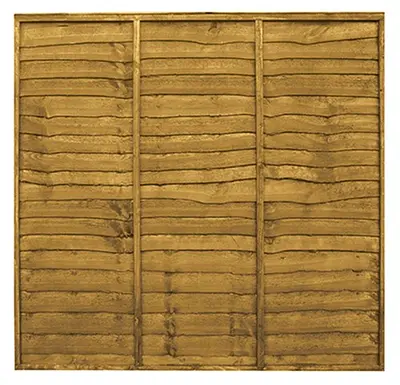 6'x6' Waney Lap Panel
each
£30.00 inc VAT
£25.00 ex VAT
In the yard
-
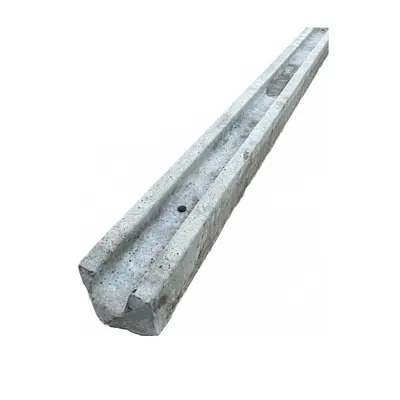 2.7mtr Slotted Concrete Post (9')
each
£30.60 inc VAT
£25.50 ex VAT
In the yard
-
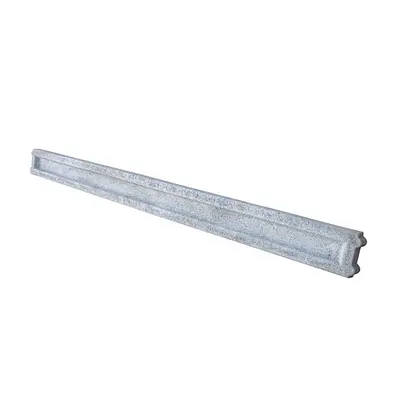 1830x50x150mm (6") ** Light Weight** Recessed Concrete Gravel Board
each
£15.00 inc VAT
£12.50 ex VAT
In the yard
-
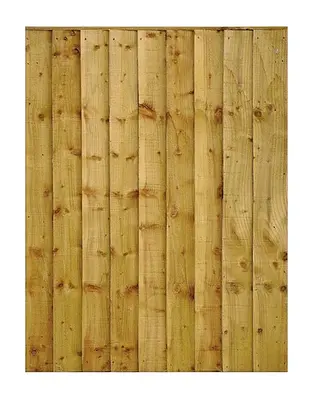 Gate vertical board 910x1830
each
£59.40 inc VAT
£49.50 ex VAT
In the yard
-
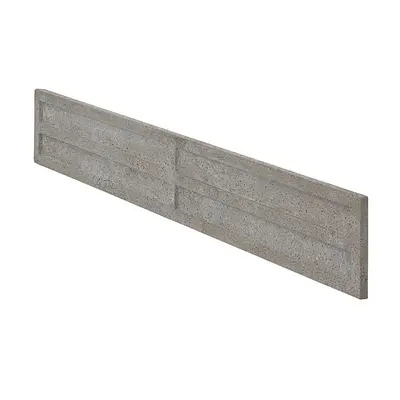 1830x50x300mm (12") ** Light Weight ** Recessed Concrete Gravel Board
each
£24.00 inc VAT
£20.00 ex VAT
In the yard
Prices are the shop's prices today. Stock and ordering are on www.discountbm.co.uk.
Fence lines for Gillingham and Hempstead See all Fencing Supplies on the shop
Delivery to Gillingham and Hempstead
- ME7
-
Free when the goods reach £41.66 ex VAT (£49.99 inc VAT).
A smaller order pays the difference up to that amount: goods of £25.00 ex VAT (£30.00 inc VAT) pay £16.66 ex VAT (£19.99 inc VAT) for delivery.
More guides for Gillingham and Hempstead
- Sub-base and pad for a log store in ME7 Type 1, sharp sand, ballast and cement for a 2.5 by 1.9 metre log store pad in ME7, with the concrete counted by volume and a worked order.
- Stud partition for a garage conversion Studs, plates, noggins and OSB bracing for a 3.6 metre garage partition in ME7, with each length counted and finished as a worked order.
- Brick gate piers beside a side passage Bricks, footings, sand and cement for two 1.5 metre gate piers beside a side passage in ME7, counted course by course to a worked order.